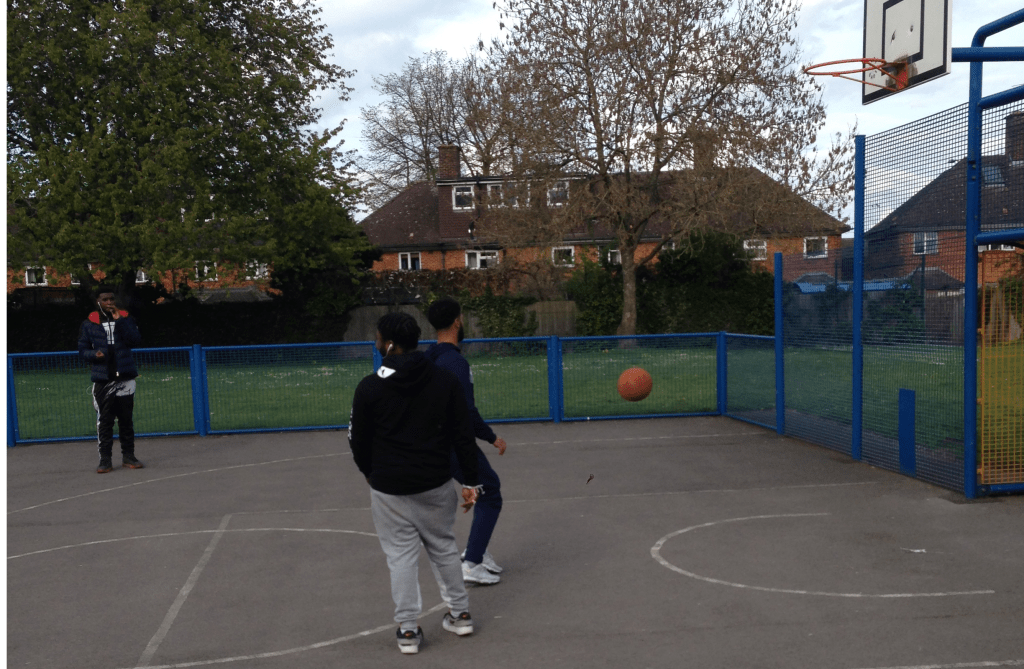
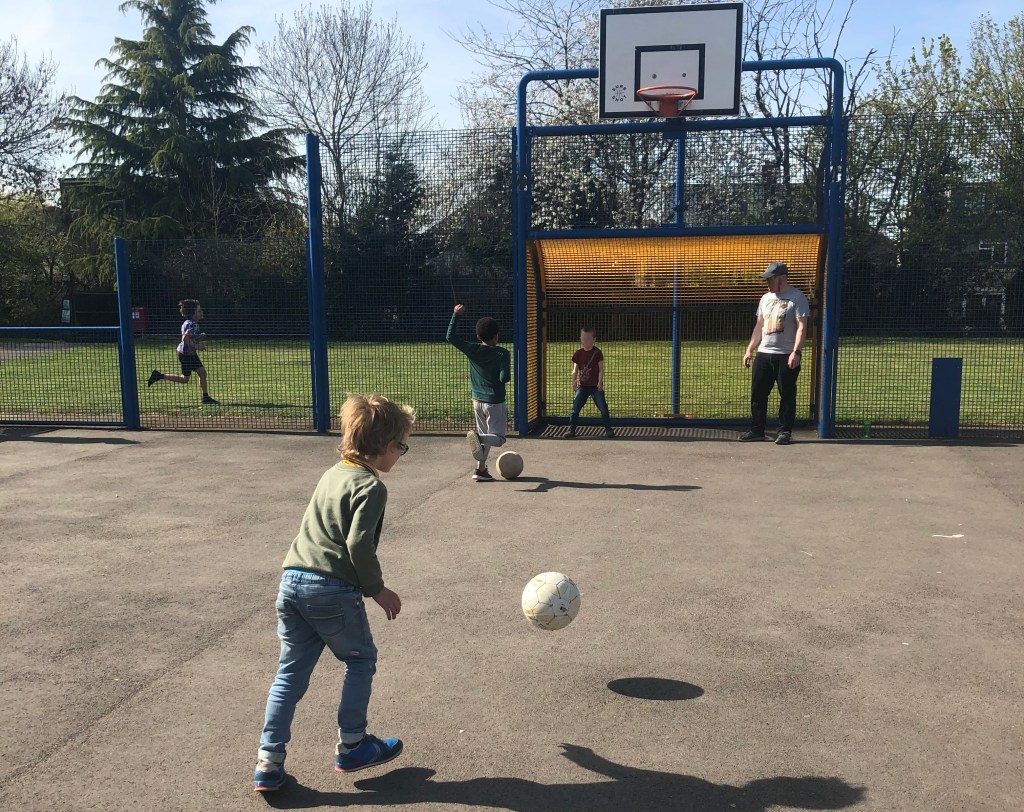
M.M who is 19, going on 72 said “it is nice to chill, have fun, socialising”. He didn’t want to lose the park adding “It’s pathetic. Let’s be real. Round this side of the bridge there is no other park. If they take this park away, it will affect every local citizen and all young pupils. It will take away the only park for a mile. There’s nowhere else to play”. As if to reflect the council’s attitude to the park M.M pointed out “They haven’t put new basket ball nets up for the past 3 years”.
I don’t know why they don’t keep it like it is.
Kojo, 20
This park’s a big part of little kids’ growing up time. If the park is not here children might get led into a lifestyle that they might not enjoy. Children might end up hanging around with the wrong people. Growing up in a park in your local area builds character.
Michael, 22
Some of the group hesitated to comment because they thought that they were too young for their opinions to count.
Oxford City Council chooses its language very carefully when defending its decision to build on Bertie Park Recreation ground.
The council’s 2019 draft proposal suggested that the playground on Bertie Park should become “smaller but more modern”. The council then promised to provide an “adequately sized” play area before conceding that they are legally obliged to provide a play area and multi-use games area (MUGA) which are “equal to or better than” the existing facilities.
“Multi Use Games Area” is also an interesting term. The current local plan clearly states that the recreation ground including the MUGA should be re-provided on the wasteland behind Wytham Street. The current MUGA is a steel fenced area with built-in goal posts and basketball nets. The council intends to replace this with a “kick-about area with goal nets”. Calling it a MUGA doesn’t mean that it really is a MUGA.
In the Oxford Mail article on 20th March (First of 1,100 new council houses to tackle Oxford housing crisis built) Bertie Park was among 3 sites that Alex Hollingsworth appeared to call “scraps of land”. A recent Labour newsletter called nearby playground in Fox Crescent a “small but highly valued play area” whereas Bertie Park was labelled a “brownfield site”. According to the council’s own definition, “an open space which is used as an amenity, and where the remains of previous use have blended into the landscape”, cannot be considered as Brownfield Land. Is there a reason for the council’s careful choice of words?
In the local Plan, Bertie Park is referred to as a “recreation ground”. The city council would like to re-brand 93% of Bertie as “open green space”, and re-provide ALL of this on the wasteland behind Wytham Street. The problem is that the wasteland is not overlooked; the police do not consider it safe, so Bertie Park’s open green space is now destined to become a family nature trail. Although the nature trail will be green, it will neither be open space, nor suitable for free play.
Councillors and council officers like to tell us that Bertie Park has been in local plans since 2001, but the local plan, which was agreed by the council, says that planning permission for building on Bertie will only be granted if the recreation ground is re-provided. There are many reasons why it is not possible to do this. So, on the one hand, they argue that the development should go ahead because it has been in local plans since 2001, but on the other hand they explain that it is not necessary to follow the local plan.
The council likes to blame the lack of social housing on its residents: “A plan to build as many as 33 homes at New Hinksey Playground on Bertie Place, known locally as Bertie Park, has recently met with resistance from local families”. It frequently cites the 3000 families on the waiting list for housing, yet the council is only planning to build 1,900 houses over the next 10 years. (First of 1,100 new council houses to tackle Oxford housing crisis built, Oxford Mail, 20th March 2021)
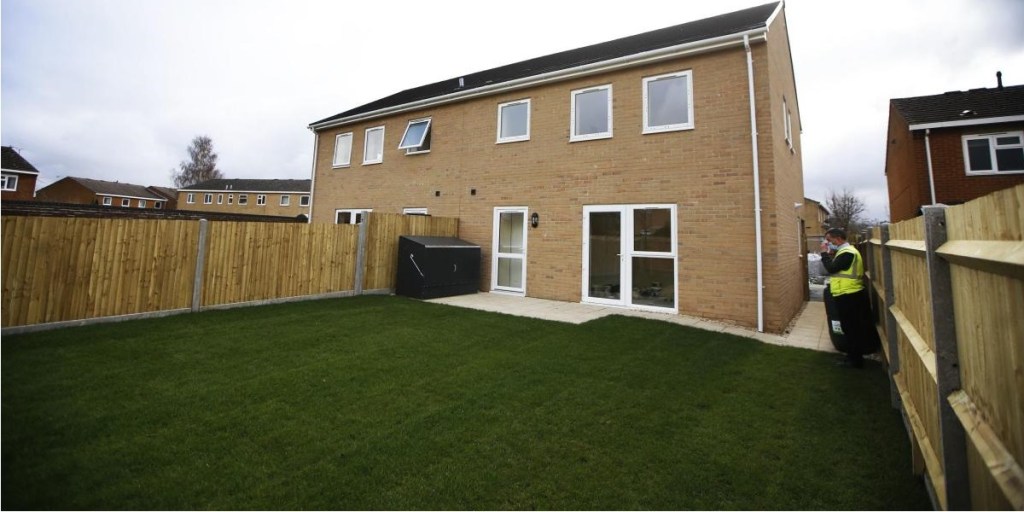
Images like this in the Oxford Mail article are misleading because they give the impression that there is enough space to build 30 houses like this on Bertie Park.
The council wants to save money by building homes on council-owned land. This means that as more homes are built, there are fewer amenities for more people. It is more willing to invest in commercial property than housing. Last year they borrowed £67 million for investment in commercial properties. When the National Audit Office branded such investment risky, only one councillor suggested that this money could be better invested in projects like housing. (Oxford City Council warned about investing in commercial properties, Oxford Mail, Feb 2020). Social housing is funded by levies paid by large new housing developments, but the majority of housing built in Oxford is still not affordable for its residents. More and more homes end up in the private rented sector; more people end up on the housing list. There have been 3,000 people on the housing list for at least 20 years. There are 430 acres of land earmarked for employment in the city. The council is more willing to build on recreational land than reclassify employment land for housing. Before the pandemic, Oxford had full employment. Creating more jobs risks creating more housing demand, putting even more pressure on an over-heated housing market.
In its editorial on 11th March, the Oxford Mail said that at some point, we must draw a line and say if we want this to be a great place for people to live, then we also have to protect the things that make it great: the things people love like Bertie Rec. (We stand with all the children fighting to save Bertie, Oxford Mail, 11th March 2021). Instead of the council making its decisions behind closed doors, we urgently need an open discussion of the issues.