London is chronically short of land for building. There is so much land in Oxford that the City Council would like to transform the city by creating more employment, attracting an extra 100,000 residents. On a national podcast this morning new houses in Wolvercote were being advertised for sale. When I checked, prices range from £634,950 to £925,000.
It is obvious that land for building is not in short supply. What is in short supply is council land that the council doesn’t have to pay for. The problem is that most of our council land is already home to amenities like Bertie Park. Many people wonder why OCC is trying to significantly downgrade a Park in an area like Cold Harbour while encouraging the building of unaffordable housing elsewhere in the city. People in our area should not be forced to choose between social housing and amenities. Please sign or share the link to our petition: https://www.change.org/SaveBertie
Here are questions recently sent to Alex Hollingsworth who is OCC cabinet member for planning and housing delivery
When were residents consulted?
You say that Bertie Park was first allocated for development in 2013 after going through multiple stages of public consultation. The accepted plans stated that planning permission would only be given if the recreation ground was re-provided on the land behind Wytham street. Your consultation never asked us whether we wanted our playground and Multi Use Games Area squeezed in alongside new housing, as you are now proposing.
Who protects Oxford’s recreational facilities?
You make it clear that Oxford City Homes Limited (OCHL) are responsible for designing the development. You say they have to make an independent decision about the scheme it will submit. You are one of the OCHL shareholder panel members. Your whole focus is the provision of housing. So, whose responsibility is it to make sure that we have an equivalent recreation ground that complies with current OCC policies?
Which policies will be taken into account?
You say that the Planning Committee members must weigh up the application against national and local planning policies, and decide whether or not to approve the application. What do you mean by “local planning policies”? The proposed changes to Bertie Park go against a number of Oxford City Council policies. Which of OCC’s policies have to be taken into account? Which can you choose to ignore?
Oxford City Council currently intends to build on all of the open green space on Bertie Park. They would like to compensate by upgrading a nature trail on the adjoining wasteland. I had a conversation with Oxford City Council in which they said that this was not problematic as they didn’t see a difference between “open” green space and “green space”. For the council, there is no difference between a recreation ground and a nature trail, after all, they are both green.
I know that the council plays games with words. See previous blog: Oxford City Council’s Use of language: https://wordpress.com/post/savebertie.com/187 This spurred me on to do a little research. In their Green Spaces Strategy, Oxford City Council acknowledges that there are “many types of green space”, with different uses and qualities, attracting different sections of the community. This certainly rings true. We have a Facebook series on things that you can do on an open green space, but not on a nature trail.
The Green Spaces strategy also states that every playground should be surrounded by a buffer zone. The size depends on the type of play area. A Neighbourhood Equipped Area for Play (NEAP) is mainly for older children but with play opportunities for younger children too. According to some sources, the recommended buffer zone for a NEAP is 30m from the boundary of the nearest property.
So, it looks very much like our open green space is really a buffer zone, and that Oxford City Council would like to re-provide the WHOLE of the buffer zone around the play areas on Bertie Park as a family nature trail on a separate site, which will be unsuitable for unaccompanied children.
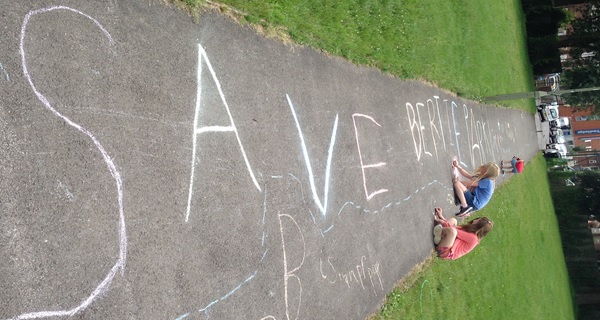
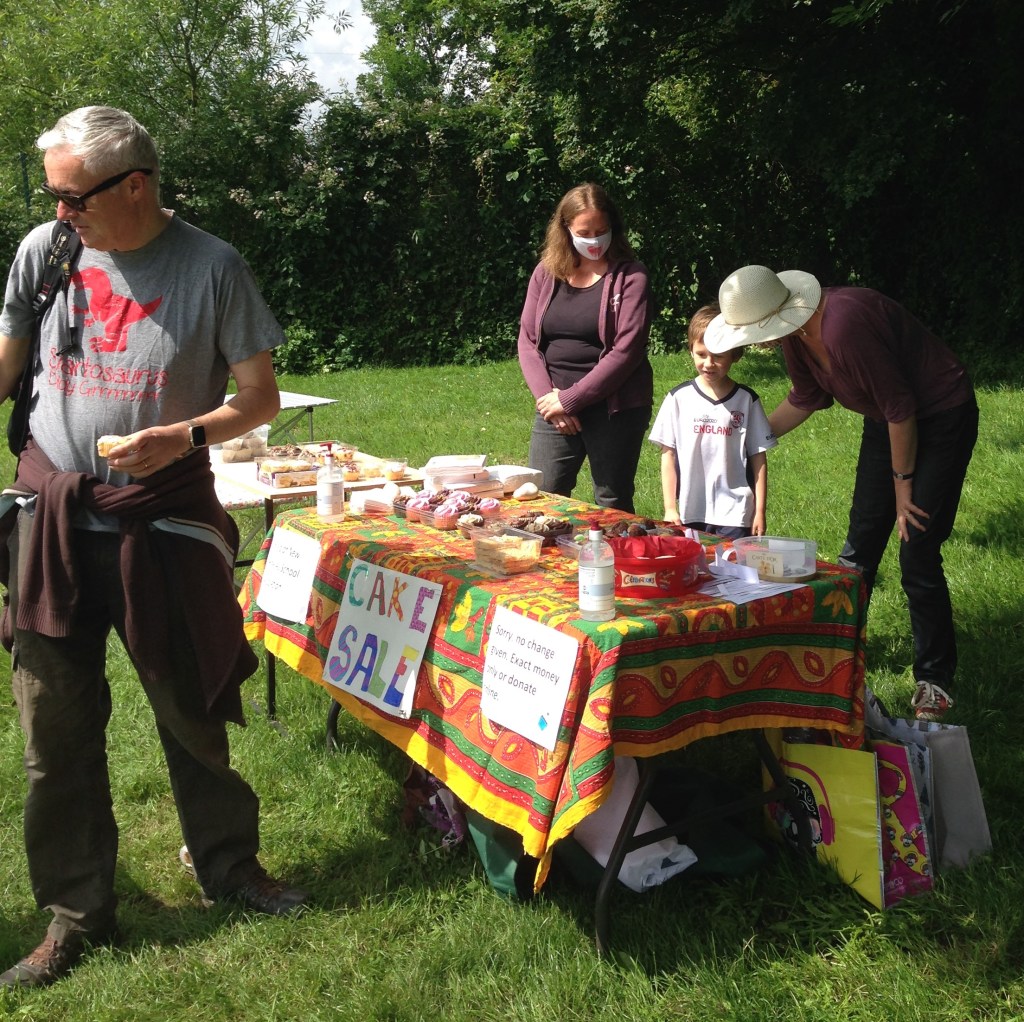
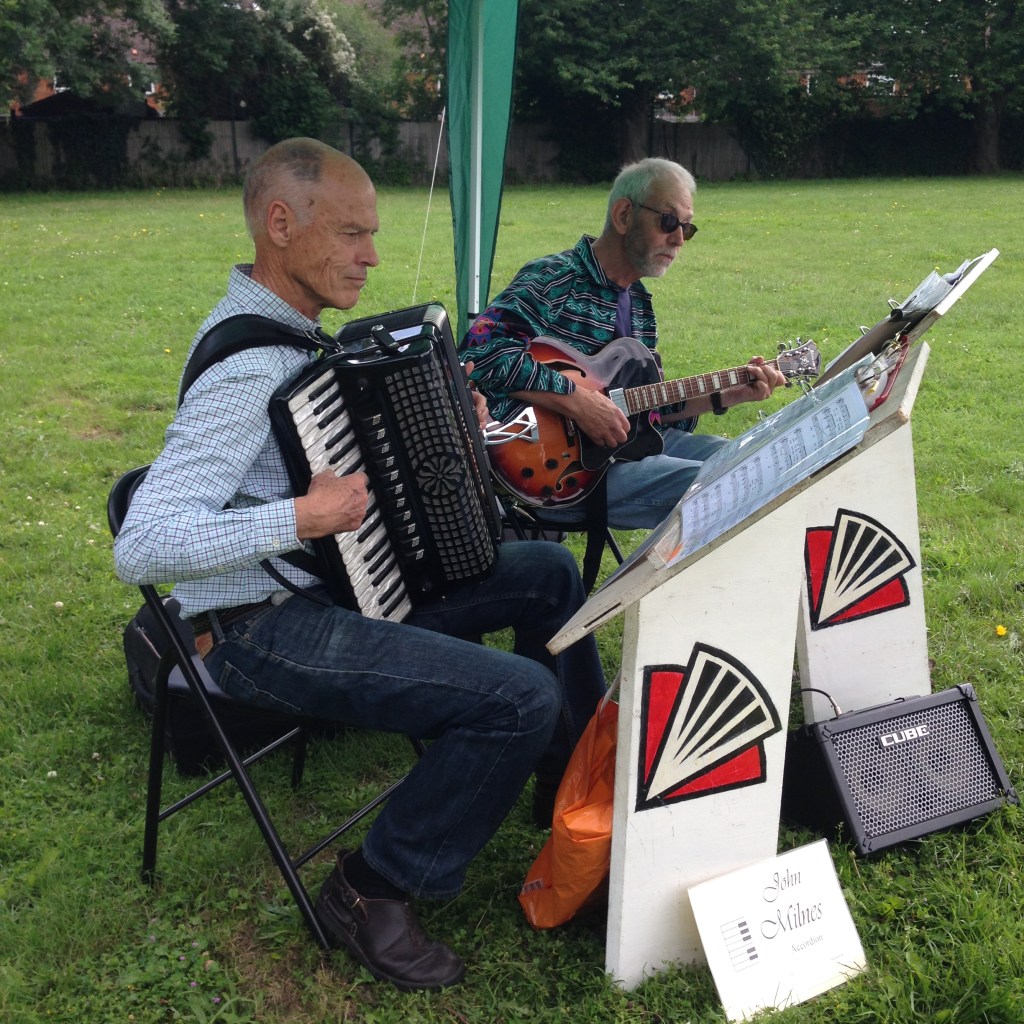
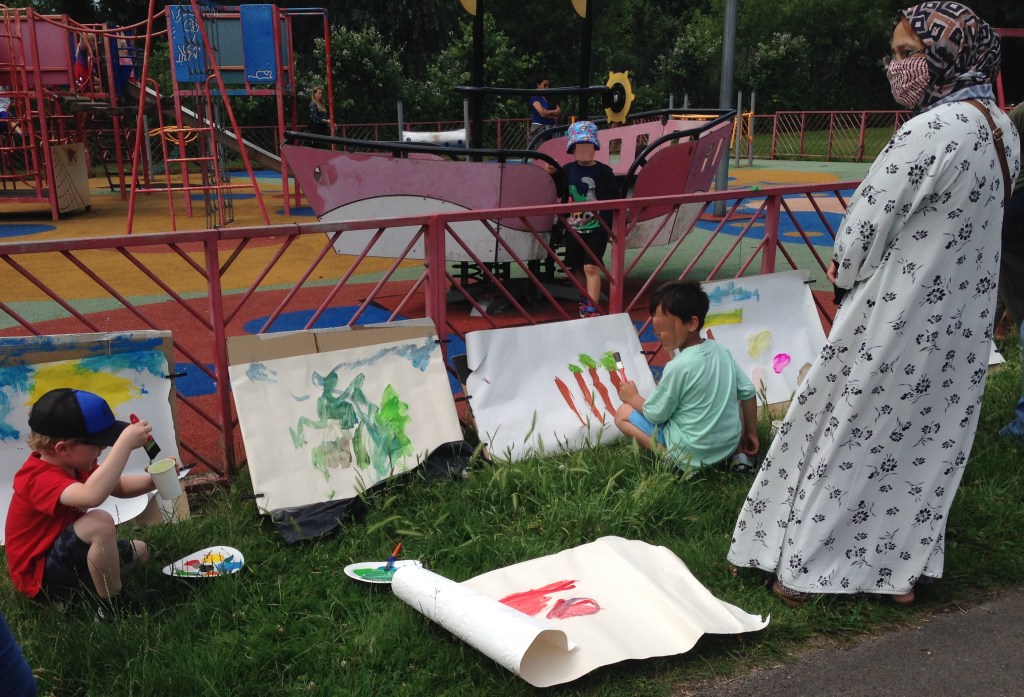
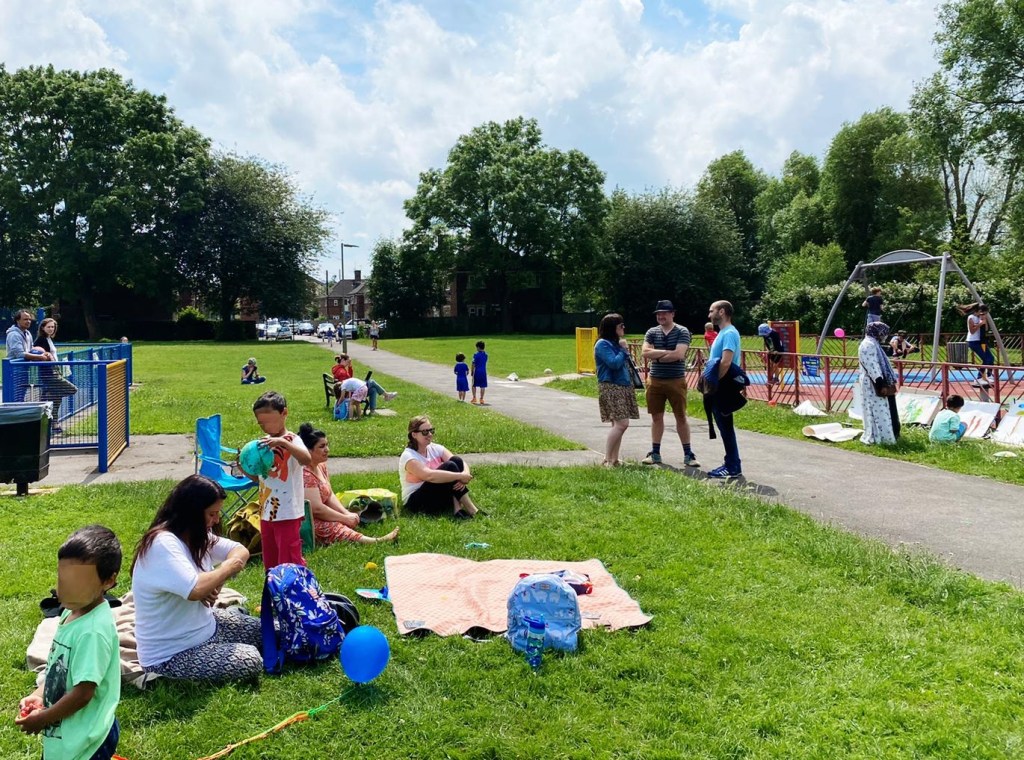
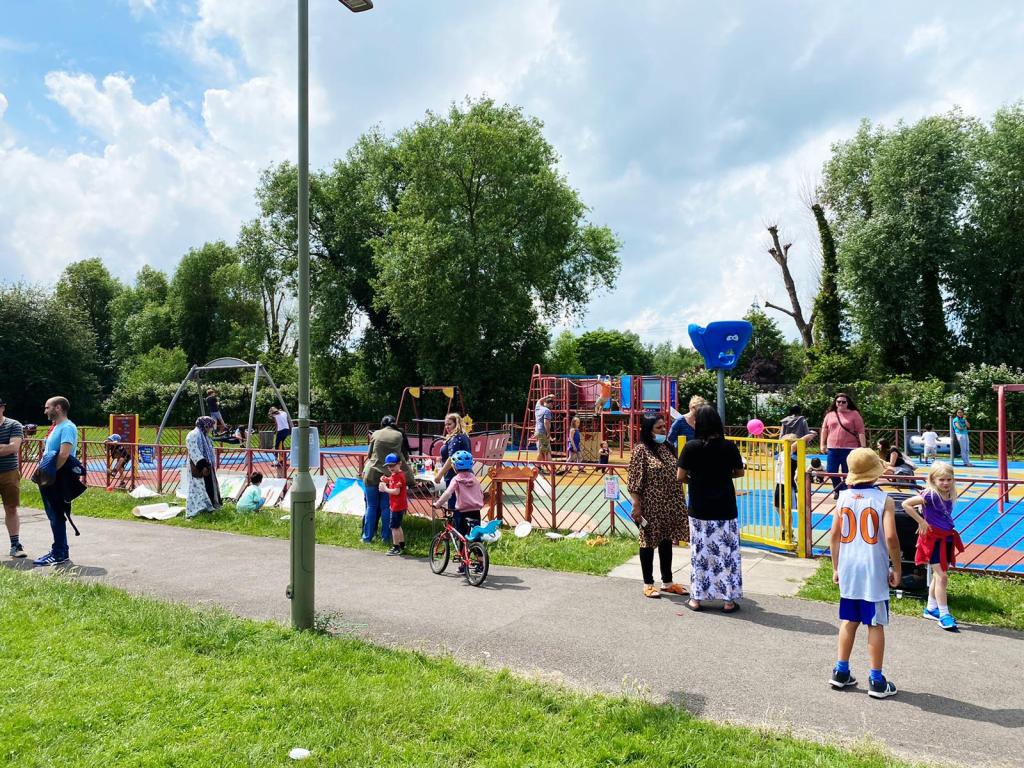
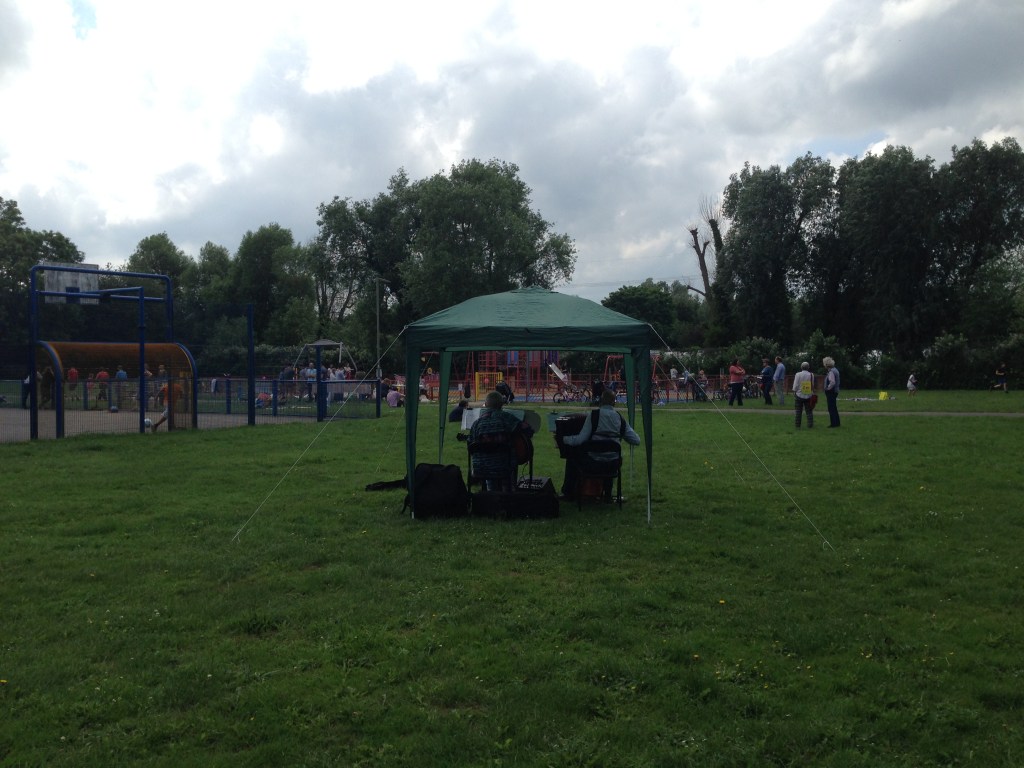
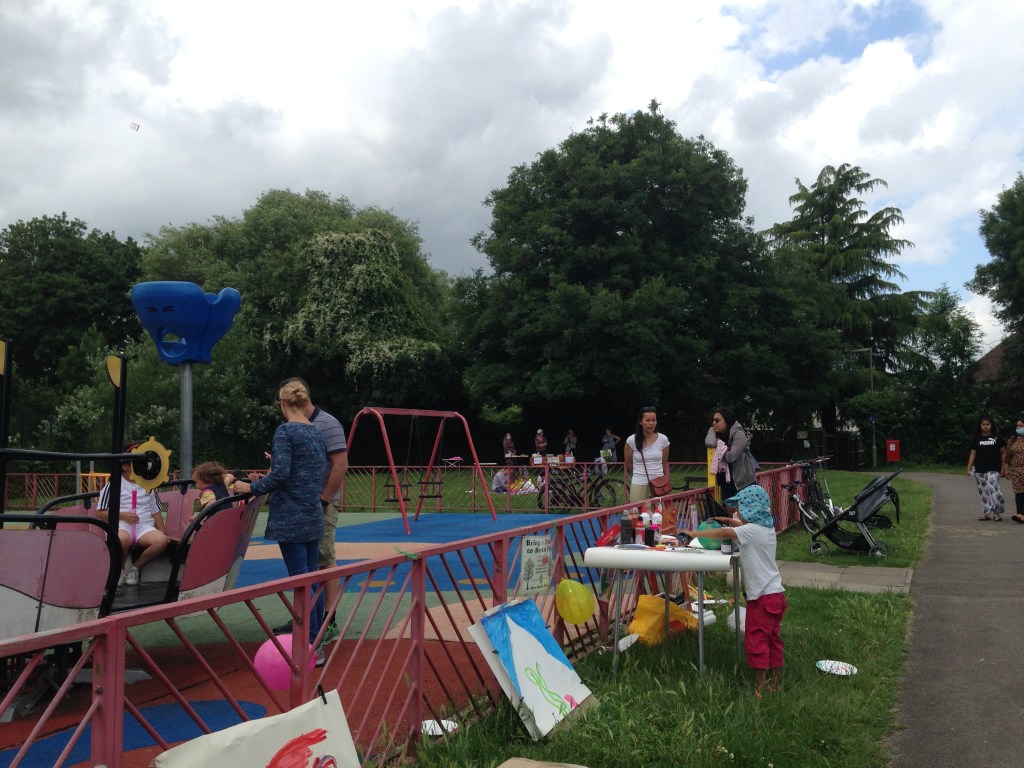
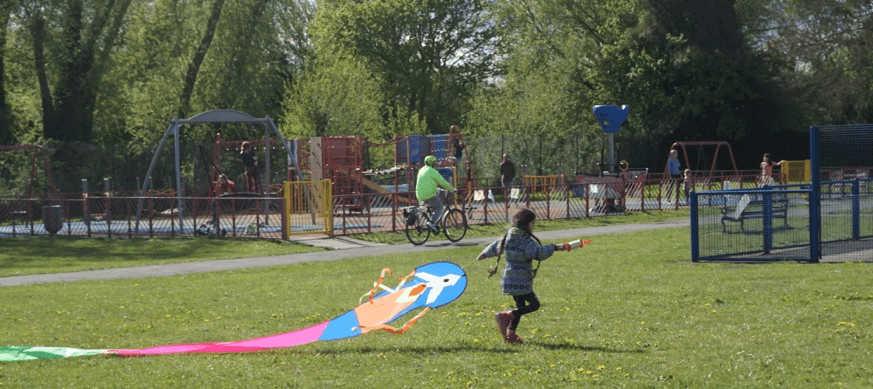
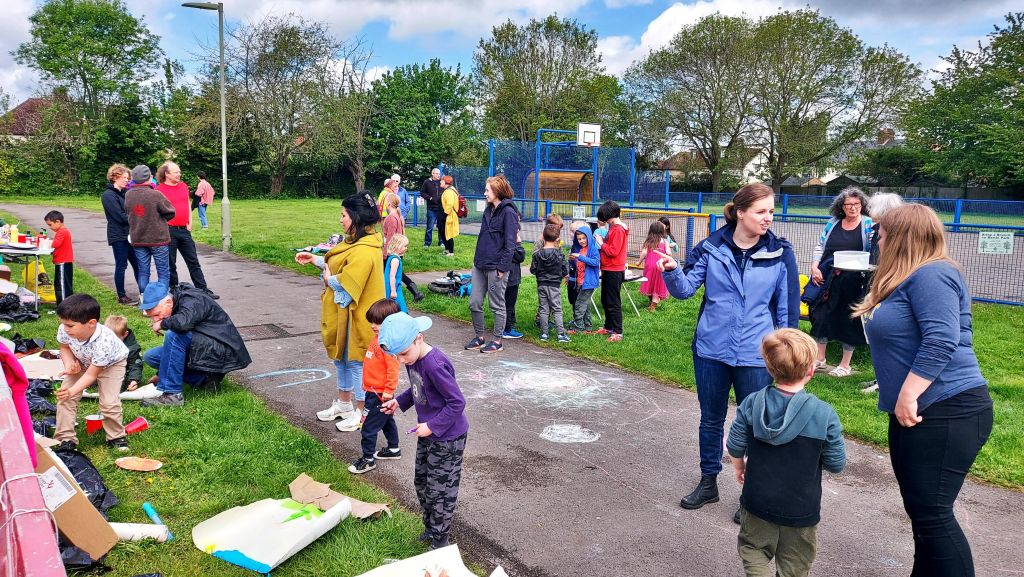
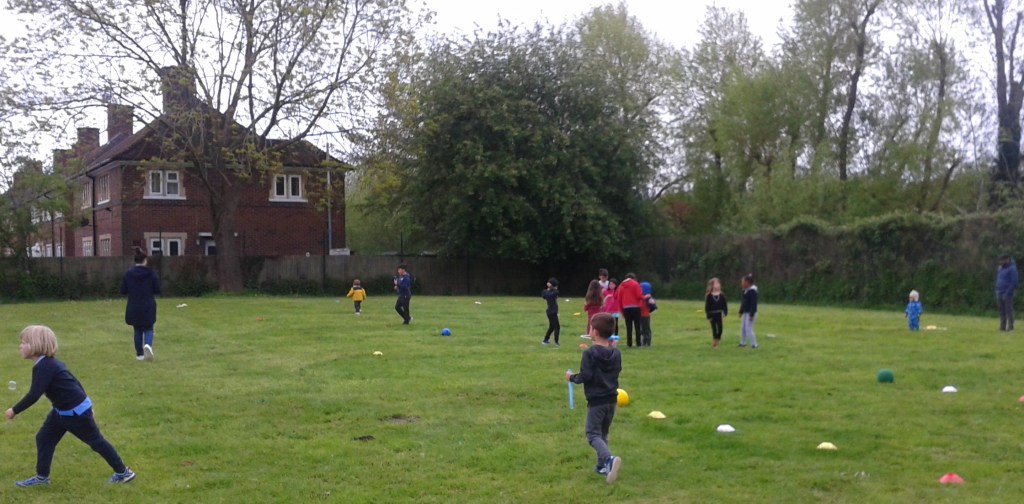
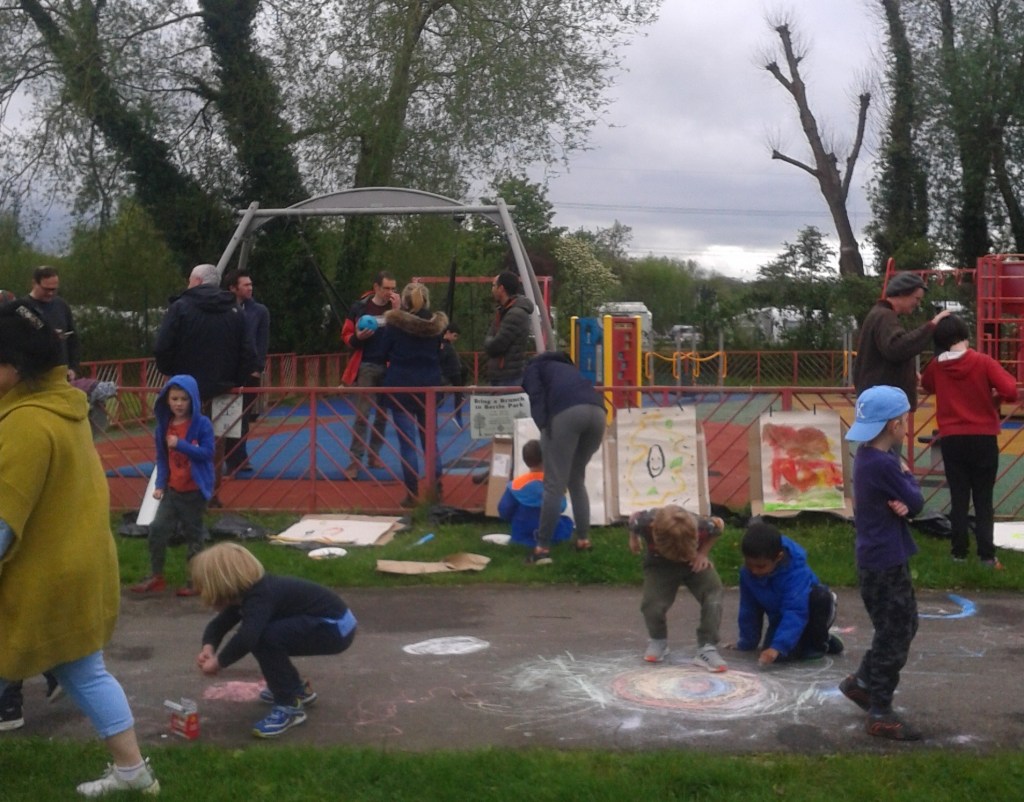
From 11.00 to 13.00 on Saturday 26th June, roughly 100 people of all ages attended the Save Bertie Campaign’s second “Brunch on Bertie”. The activities were spread out across the park.
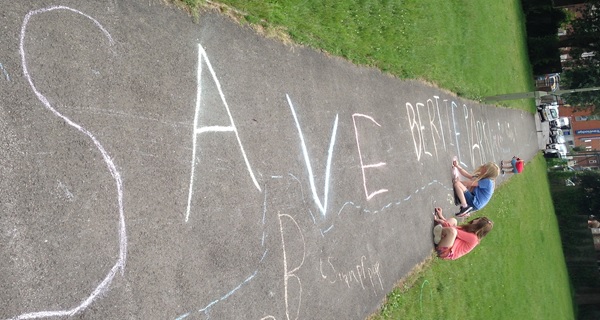
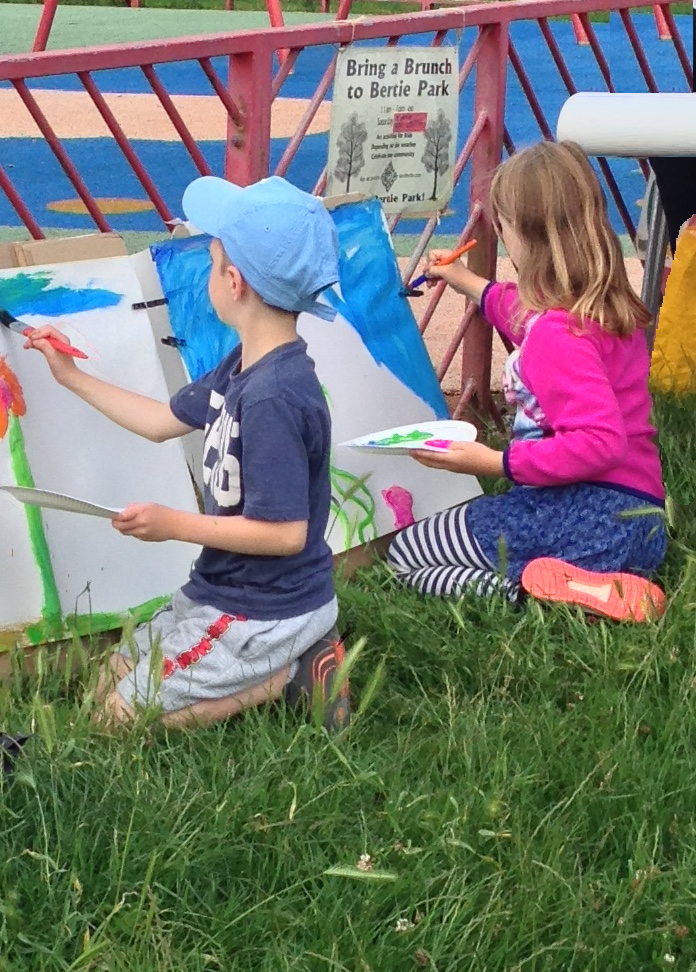
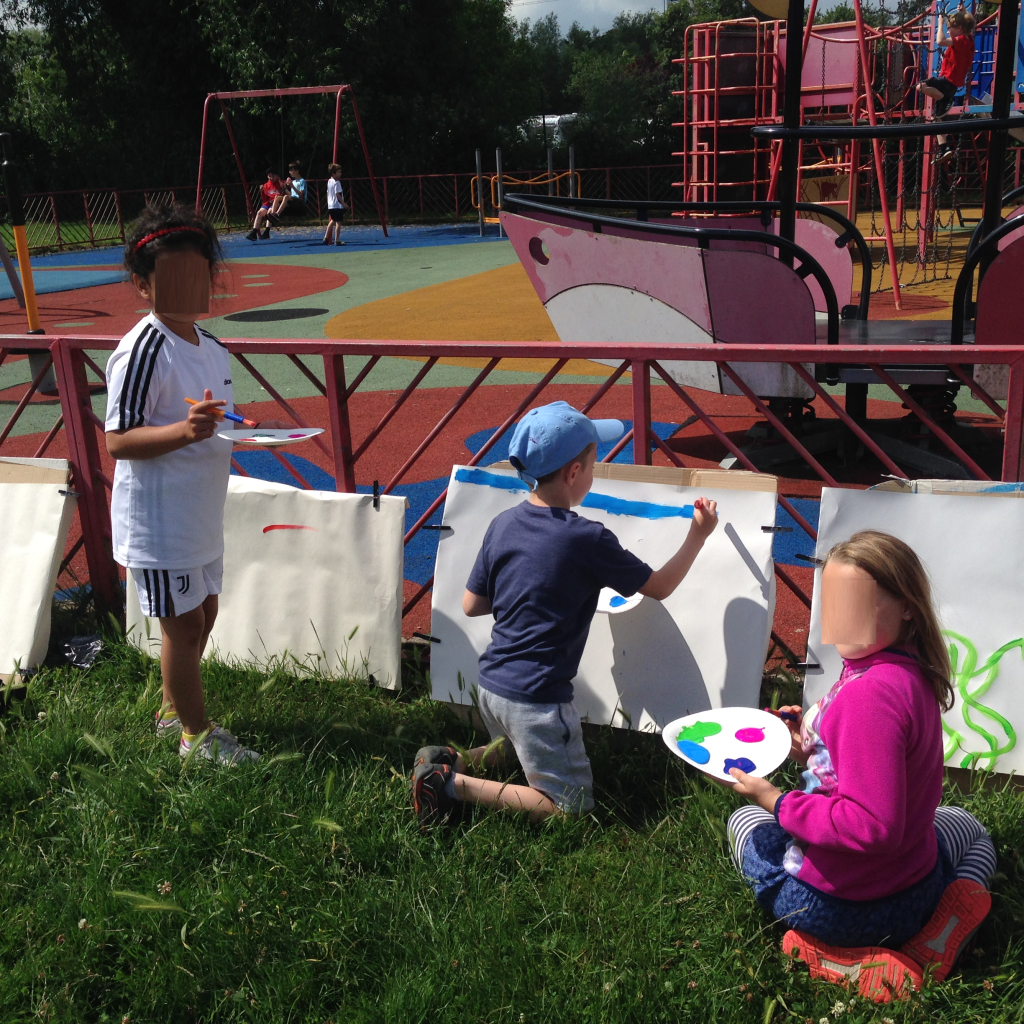
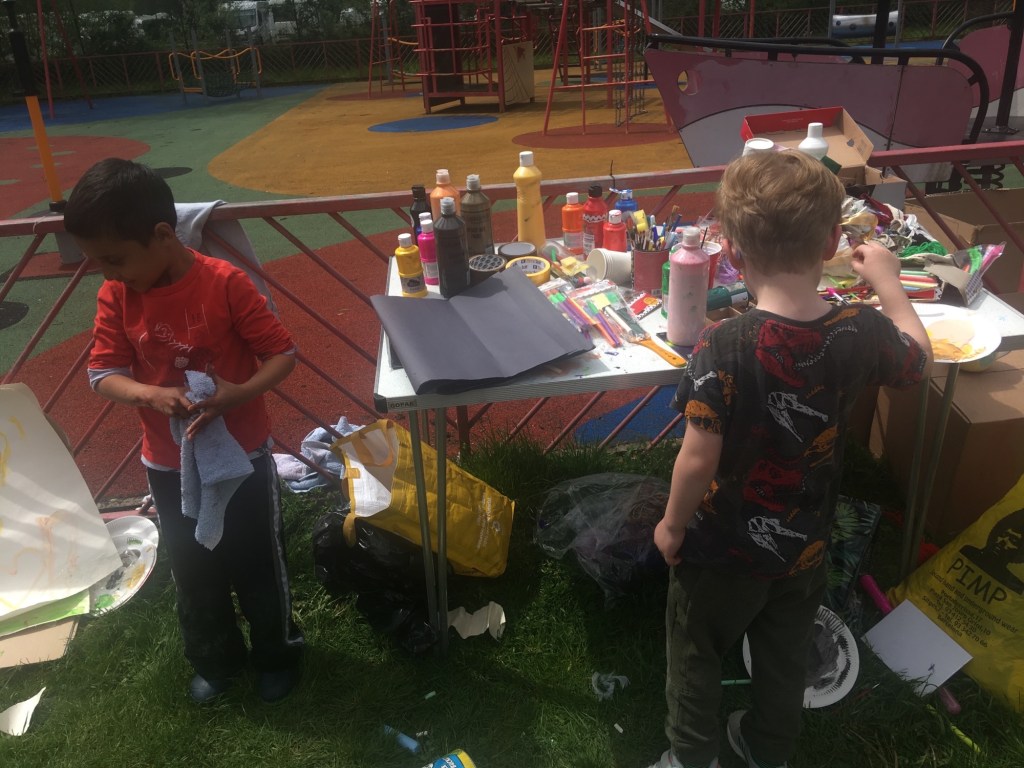
Activities involved pavement chalk, paint, French skippping, balloons and bubbles. Shazia made samosas for everyone, we had our first book swap, and a bake sale in aid of the New Hinksey School Association raised at least £100. All this was accompanied by sunshine, and live music by Belle Musette.
Oxford City Council would like to build on most of the space we were using today. They would like to “re-provide” all of the open green space as a family nature trail on an adjoining area of wasteland that the police say is not safe for unaccompanied children. The event emphasises just how important it is to have an open green space for the community to come together. One of our supporters said that her son didn’t want to leave, and commented how on how lovely it was to chat to parents that she usually just says ‘hi’ to on the school run.
To support our campaign, follow this blog, follow the Save Bertie Park, Oxford Facebook page, or sign our petition: https://www.change.org/SaveBertie
Nobody actually wants Oxford City Council to build on Bertie Park. If people support the development, it is because they believe that families deserve homes, and because the Council says that land is in short supply; difficult times mean difficult decisions have to be made.
The council funds social housing by charging a levy on the construction of new homes. This means that they have to construct a large number of houses that people can’t afford in order to fund a small number of homes that they can afford. For this, they need a lot of land. They also need to find ways to make the money go as far as possible. The council doesn’t have to pay anything for land if they already own it, but the inconvenient fact is that this land is likely already to be used. Since the local plan was agreed, 5 more hectares of land have already become available. But this is not cheap land that the council already owns. The plans for Bertie Park go ahead because building on Bertie is not a last resort, but a first resort.
Somehow, the council has to defend the development. The local plan states that planning permission will only be given if Bertie Park is re-provided. They try to argue that building on Bertie will, in fact, improve it. So, a family nature trail is far better than a community green space and a very noisy multi-use games area underneath somebody’s kitchen window is not a recipe for conflict, but means better supervision. They even claim that there will be an increase in biodiversity.
The Council talks about the balance between the rights of our young people to play and their rights to own homes in the future. In a city where private schools have acres of green space available (at a price) for use by the richest children in the world, it is clear that this is not about the land, but the money, and how much we value the places where our children play.
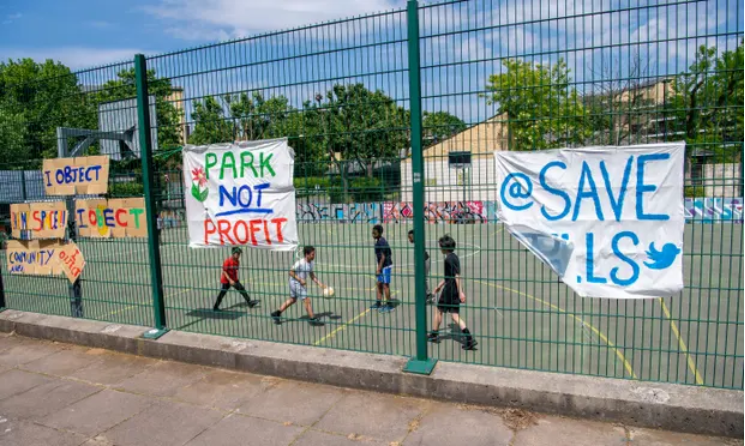
On Saturday morning, the rain held off long enough for about 80 people of all ages to come together on Bertie Park in Oxford to picnic, to play, and to show support for the Save Bertie Park Campaign.
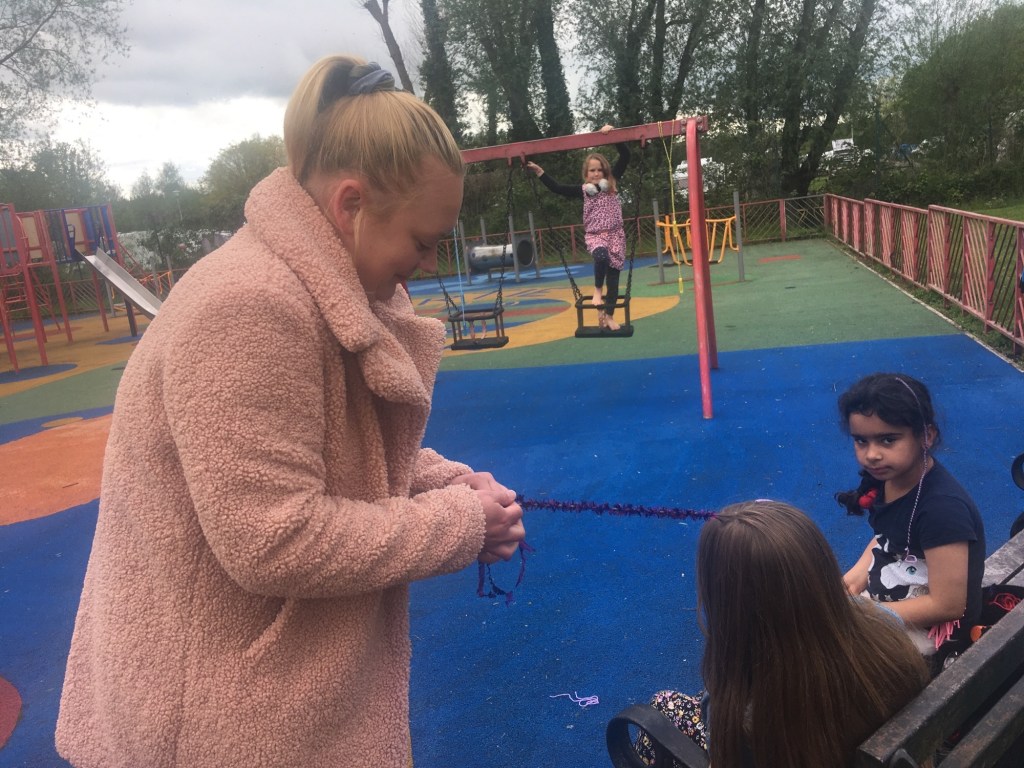
Local parents and grandparents organised activities for the younger members of our community. St Luke’s Church helped out by lending some art and games equipment; the rest was scrounged, borrowed and bought. The children charged about on the grass with bubble wands, and chalked pictures all over the cycle path, a self portrait gallery turned into a general picture painting group, and there was a rebel hair braiding area set up on a bench in the playground.
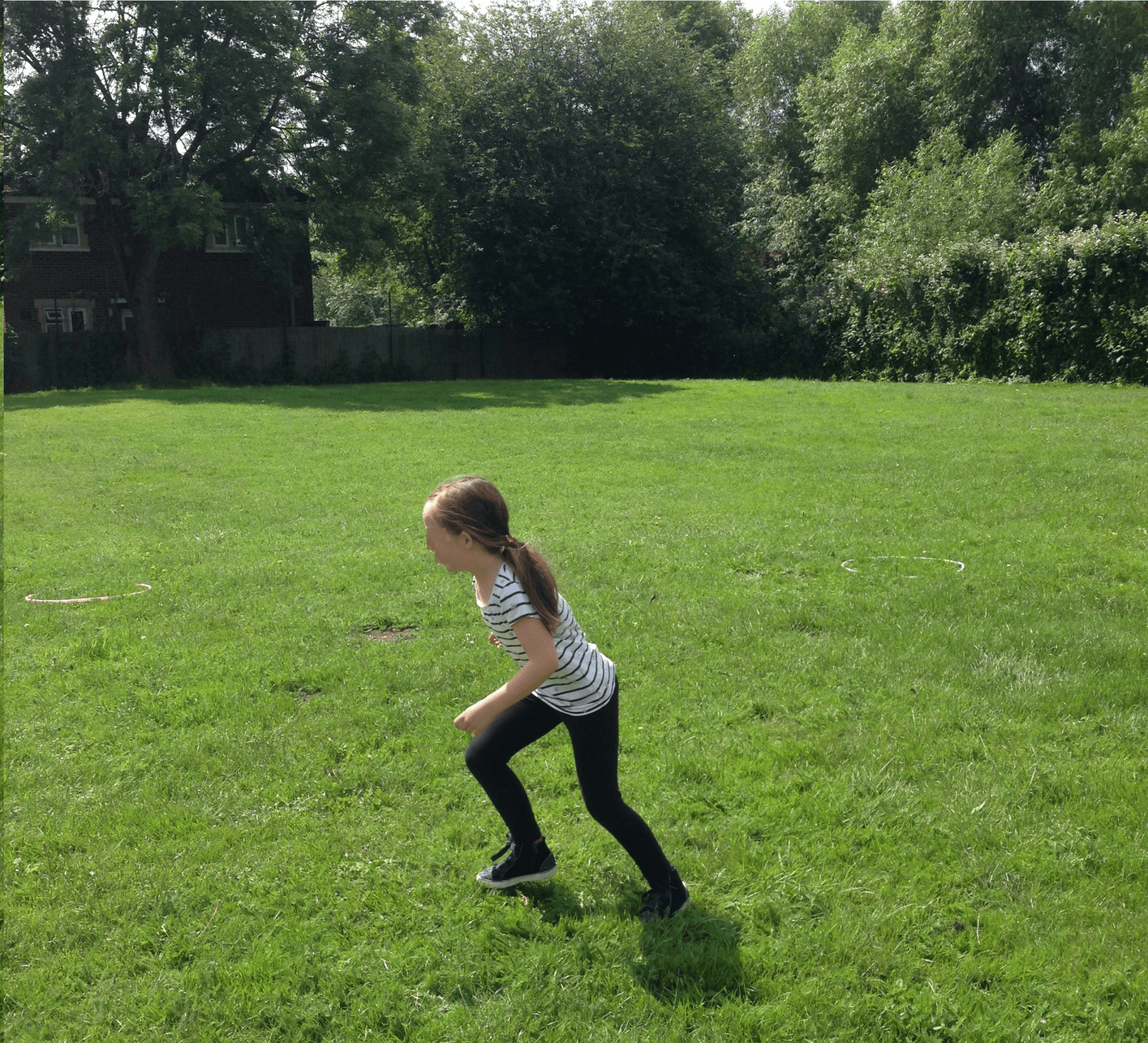
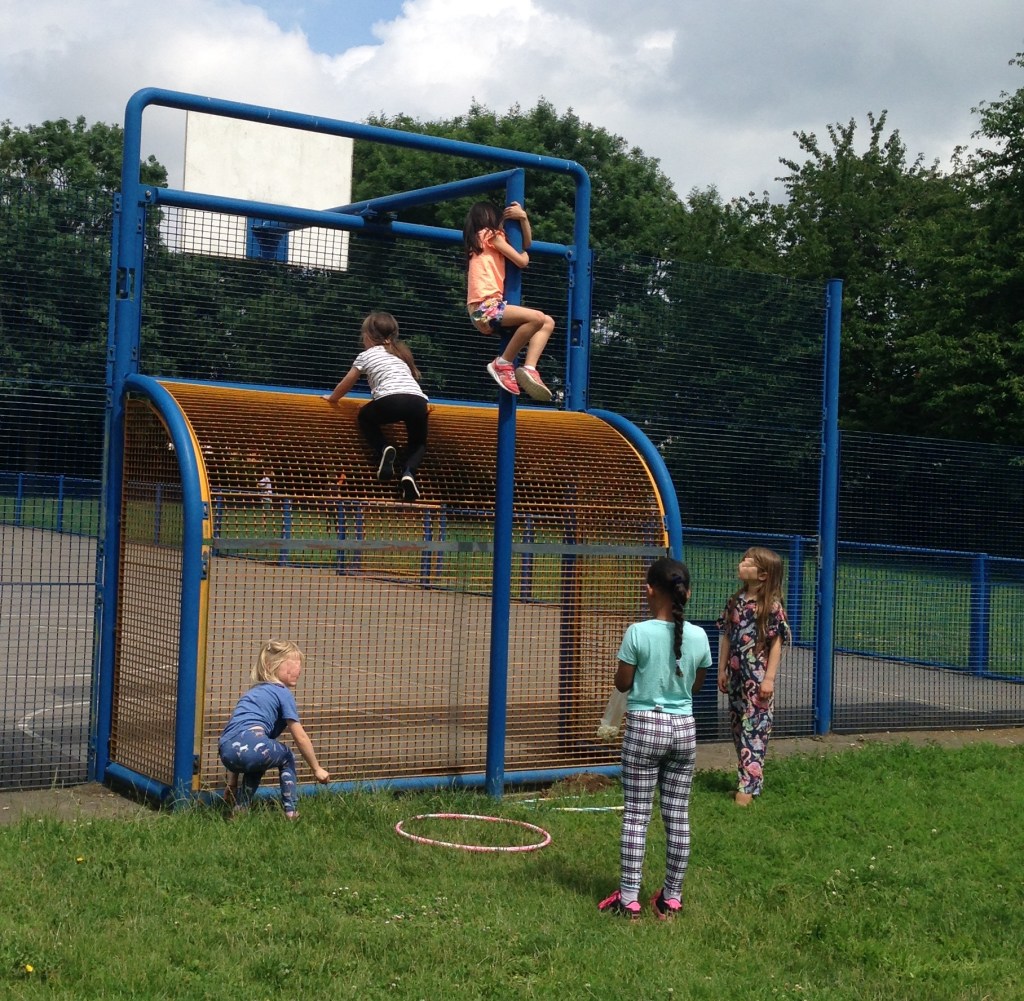
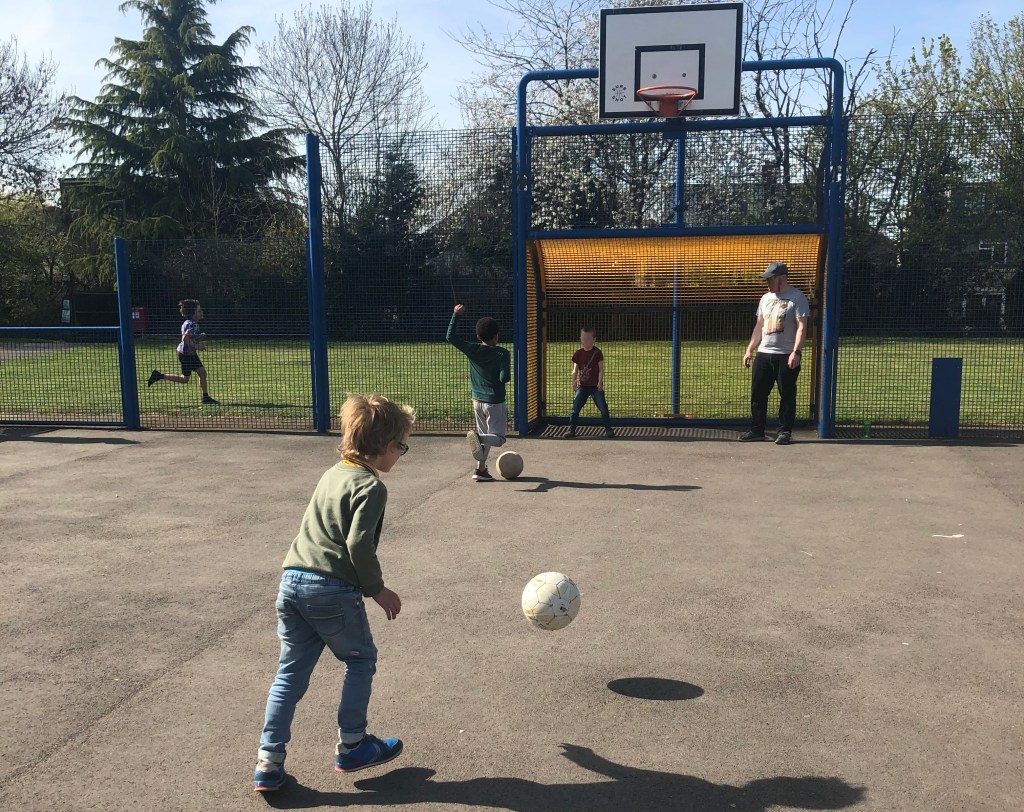
In amongst it all a child’s birthday party and plenty of cake. Children moved between grass and climbing frame to basketball area as the mood and the games progressed. While all of this was going on, there was plenty of opportunity for people to catch up on the news. Passing shoppers and tourists from the park and ride and the camp site also joined in the fun and were shocked to hear that the park was under threat. Community doesn’t get any better than this.
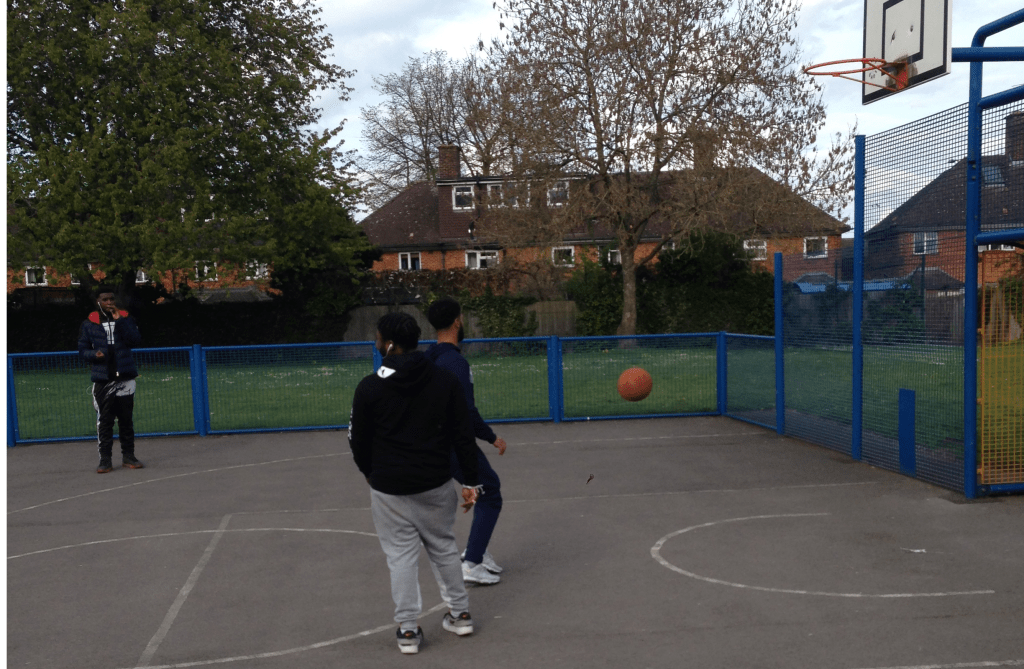
M.M who is 19, going on 72 said “it is nice to chill, have fun, socialising”. He didn’t want to lose the park adding “It’s pathetic. Let’s be real. Round this side of the bridge there is no other park. If they take this park away, it will affect every local citizen and all young pupils. It will take away the only park for a mile. There’s nowhere else to play”. As if to reflect the council’s attitude to the park M.M pointed out “They haven’t put new basket ball nets up for the past 3 years”.
I don’t know why they don’t keep it like it is.
Kojo, 20
This park’s a big part of little kids’ growing up time. If the park is not here children might get led into a lifestyle that they might not enjoy. Children might end up hanging around with the wrong people. Growing up in a park in your local area builds character.
Michael, 22
Some of the group hesitated to comment because they thought that they were too young for their opinions to count.
Oxford City Council chooses its language very carefully when defending its decision to build on Bertie Park Recreation ground.
The council’s 2019 draft proposal suggested that the playground on Bertie Park should become “smaller but more modern”. The council then promised to provide an “adequately sized” play area before conceding that they are legally obliged to provide a play area and multi-use games area (MUGA) which are “equal to or better than” the existing facilities.
“Multi Use Games Area” is also an interesting term. The current local plan clearly states that the recreation ground including the MUGA should be re-provided on the wasteland behind Wytham Street. The current MUGA is a steel fenced area with built-in goal posts and basketball nets. The council intends to replace this with a “kick-about area with goal nets”. Calling it a MUGA doesn’t mean that it really is a MUGA.
In the Oxford Mail article on 20th March (First of 1,100 new council houses to tackle Oxford housing crisis built) Bertie Park was among 3 sites that Alex Hollingsworth appeared to call “scraps of land”. A recent Labour newsletter called nearby playground in Fox Crescent a “small but highly valued play area” whereas Bertie Park was labelled a “brownfield site”. According to the council’s own definition, “an open space which is used as an amenity, and where the remains of previous use have blended into the landscape”, cannot be considered as Brownfield Land. Is there a reason for the council’s careful choice of words?
In the local Plan, Bertie Park is referred to as a “recreation ground”. The city council would like to re-brand 93% of Bertie as “open green space”, and re-provide ALL of this on the wasteland behind Wytham Street. The problem is that the wasteland is not overlooked; the police do not consider it safe, so Bertie Park’s open green space is now destined to become a family nature trail. Although the nature trail will be green, it will neither be open space, nor suitable for free play.
Councillors and council officers like to tell us that Bertie Park has been in local plans since 2001, but the local plan, which was agreed by the council, says that planning permission for building on Bertie will only be granted if the recreation ground is re-provided. There are many reasons why it is not possible to do this. So, on the one hand, they argue that the development should go ahead because it has been in local plans since 2001, but on the other hand they explain that it is not necessary to follow the local plan.
The council likes to blame the lack of social housing on its residents: “A plan to build as many as 33 homes at New Hinksey Playground on Bertie Place, known locally as Bertie Park, has recently met with resistance from local families”. It frequently cites the 3000 families on the waiting list for housing, yet the council is only planning to build 1,900 houses over the next 10 years. (First of 1,100 new council houses to tackle Oxford housing crisis built, Oxford Mail, 20th March 2021)
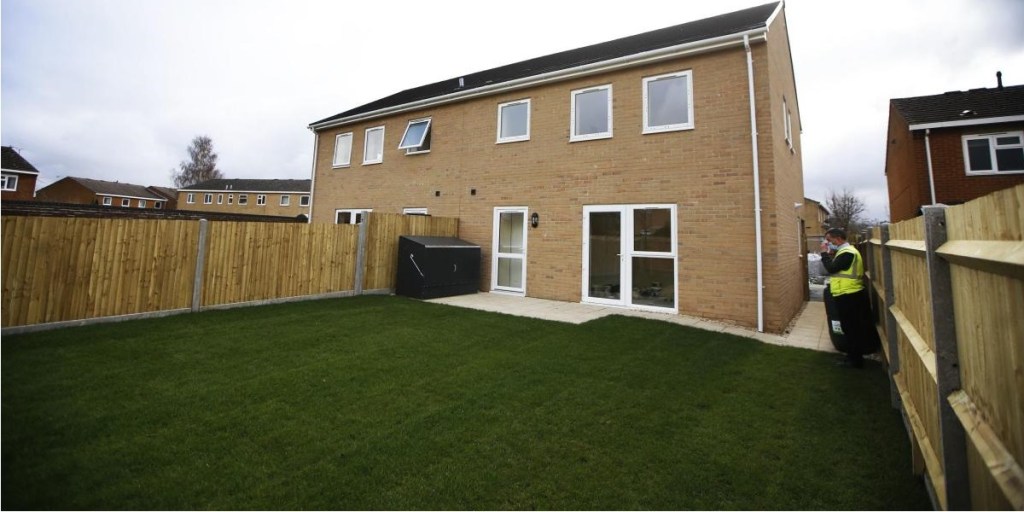
Images like this in the Oxford Mail article are misleading because they give the impression that there is enough space to build 30 houses like this on Bertie Park.
The council wants to save money by building homes on council-owned land. This means that as more homes are built, there are fewer amenities for more people. It is more willing to invest in commercial property than housing. Last year they borrowed £67 million for investment in commercial properties. When the National Audit Office branded such investment risky, only one councillor suggested that this money could be better invested in projects like housing. (Oxford City Council warned about investing in commercial properties, Oxford Mail, Feb 2020). Social housing is funded by levies paid by large new housing developments, but the majority of housing built in Oxford is still not affordable for its residents. More and more homes end up in the private rented sector; more people end up on the housing list. There have been 3,000 people on the housing list for at least 20 years. There are 430 acres of land earmarked for employment in the city. The council is more willing to build on recreational land than reclassify employment land for housing. Before the pandemic, Oxford had full employment. Creating more jobs risks creating more housing demand, putting even more pressure on an over-heated housing market.
In its editorial on 11th March, the Oxford Mail said that at some point, we must draw a line and say if we want this to be a great place for people to live, then we also have to protect the things that make it great: the things people love like Bertie Rec. (We stand with all the children fighting to save Bertie, Oxford Mail, 11th March 2021). Instead of the council making its decisions behind closed doors, we urgently need an open discussion of the issues.





 Save Bertie Park Oxford